 I recently came across an interesting coconut cake recipe on a blog called chef in disguise that used semolina. The cake is similar to the revani cake made in the Greek community, but when using semolina, you really need to know what grade of semolina to use (med or coarse) and many recipes don’t specify.
Semolina is also not one of those ingredients that is easy to come by in most mainstream grocery stores and is usually found in international markets. I wanted to try this recipe using a combination of dessicated (dried) coconut, coconut flour and regular flour because I wanted it to be more of a coconut cake and not a semolina cake. I decided to use coconut flour to add to the overall flavor of the cake because it is easily found in any natural food market like Whole Foods, and is used in many vegan and gluten free recipes as an alternative to regular flour.
I had never worked with it before and was curious to see what kind of texture it would lend to cakes. Many things sound great, but the resulting flavor and texture leaves a lot to be desired.
After opening the package of coconut flour, I was overwhelmed with the lovely, natural coconut scent that it has and immediately thought that if I could make this cake work, it would really be delicious.
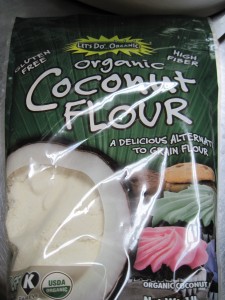
I set out to use her basic recipe, but I did end up changing a few things. I read a few posts that used coconut flour and mentioned that it could result in dense and dry cakes if you are not careful, so I used a few baking tricks that help to keep recipes light and airy.
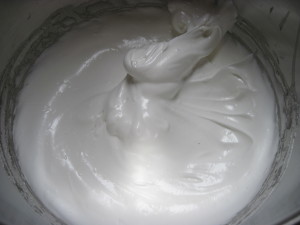
The first thing I did was separate the eggs so that I could whip the whites into a French meringue. This is a technique used in many chiffon cakes that use little or no leavening, and the airiness of the meringue is what is used to lighten the cake.
In the recipe she used, she suggested using ½ cup to 2/3 cup of oil to keep it light, but since I was not adding any other fat other than the egg yolks, I used ¾ cup of oil. She mentioned that she used yogurt, but did not say whether it was full fat, low fat or no fat… so since I used a good bit of oil, I chose to use low fat buttermilk.
The leavening she used was baking powder which does not react correctly with sour milk products like yogurt, sour cream or buttermilk. These products react better with baking soda that helps to neutralize the acid. Baking powder is best to use if you decide to use regular milk for this recipe instead of the yogurt.
You can also use a combination of both baking soda and baking powder if you are trying to achieve a certain texture or color. I chose to add enough baking soda to both neutralize the acid and add some color to the cake, but I also needed to add a little baking powder for some added lift.
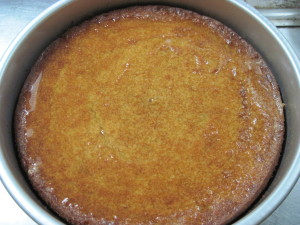
The recipe came together quite well, and I baked the cake in a high 10” cake pan (10” round by 3” high) that took about 45 minutes. The entire top was a nice golden brown color and the cake was set to the touch in the center. You could bake this in a square or rectangle shape pan for easy serving for picnics or outdoor gatherings this summer.
You can keep it simple and pour over the rum syrup like I did, or you can add your own favorite frosting instead. If you don’t have any that you use readily you can try one of my quick and easy vanilla or chocolate frosting recipes. You can also top it with some ltalian meringue and then add toasted coconut for a more traditional type of cake. Of course, the standby whipped cream works great too.
Coconut Rum Cake ( 1- 10” round)
4 eggs, separated
¼ teaspoon salt
1 cup sugar, divided
1 teaspoon vanilla
2 teaspoons coconut extract
¾ cup vegetable oil
1 cup low fat buttermilk
1-1/2 teaspoons baking soda
1 teaspoon baking powder
1 cup flour
1 cup coconut flour
1 cup desiccated coconut, not coarse
Separate the egg whites from the yolks. Place the egg whites in the bowl of your stand mixer and the yolks in a medium sized bowl. Take a small pinch of the salt that you will be adding to the recipe and add it to the egg whites and start whipping them. Once they have started to show some volume, slowly begin to add half cup of sugar. Add the other half of the sugar to the yolks along with the oil, extract and buttermilk, and whisk everything together well. In a separate bowl, sift together the flour, coconut flour, remaining salt, baking soda and baking powder. Once you have sifted these ingredients add the dessicated coconut to the bowl with the other ingredients, since you don’t have to sift the coconut.
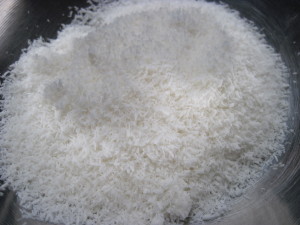
Once the egg whites have whipped up and you now have a French meringue, add 1/3 of the meringue to the egg yolk mixture and whisk them together to lighten it up. Then add 1/3 of the dry ingredients and whisk together. Add another 1/3 of the egg whites and repeat with another 1/3 of the dry ingredients. Repeat this until all of the ingredients have been incorporated well together.
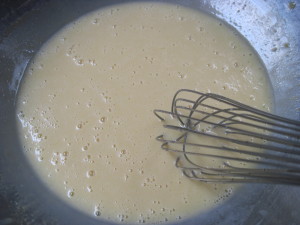
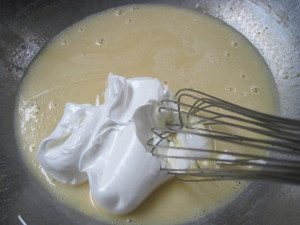
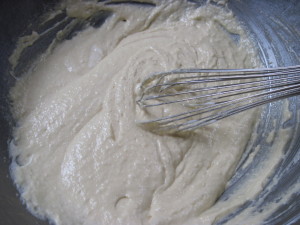
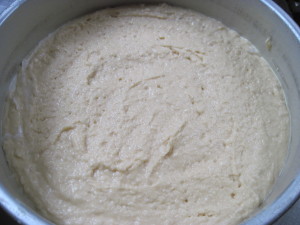
Spray your cake pan with a good quality pan release and pour in the batter. Bake at 350°F for about 45 minutes until the cake is golden brown and firm to the touch. If you prefer to test it with a toothpick to make sure it has cooked through, it should test clean.
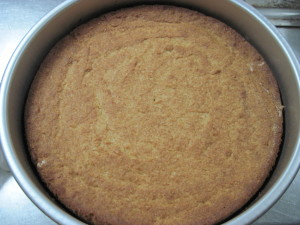
Allow the cake to cool completely before you add the warm syrup. Allow the cake to absorb all of the syrup, and while it is still in the pan, cover with plastic wrap and refrigerate for a few hours or overnight. Serve chilled.
Rum Syrup
1 ½ cup water
1 ½ cup sugar
1 tablespoon corn syrup (prevents crystallization)
½ cup rum
Add the sugar water and corn syrup to a small pot and cook for about 10 minutes until the syrup is slightly thickened. Remove from the heat and add the rum. Always add the rum after the syrup has cooked. This will help keep the rum flavor and the alcohol content, which evaporates if heated with the other ingredients. Allow the syrup to cool slightly before pouring it all over the cool coconut cake.


Leave a Reply