 One year after my family came to the USA, I met my best friend Mireya, who happened to be Cuban. I was 13 and she was 15, and because of the similarities in our backgrounds, we became fast friends. I was quickly accepted into her family and their circle of friends. Her mother was like my second mother, and her grandmother was someone who I adored. Like most typical grandmothers, she always worried about whether I was eating enough. If she happened to answer the door when I would go to visit, her first greeting to me was never ‘hello’ or ‘how are you’…it was always, ‘are you hungry, have you eaten yet?’
Honestly, I must have looked emaciated…
It didn’t stop there. Our mothers became great friends too and would go to bingo together every week. When they’d plan family events and outings, I was always invited. We hung around together so much that I became fluent in Spanish and was often mistaken for Cuban or Puerto Rican…
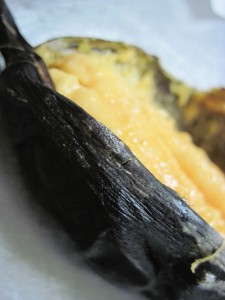
I became familiar with the food and the culture. It became a part of me and a huge part of my life. Over the years, I ate my fair share of Cuban food and loved every morsel of it. One of the things I love most is fried plantains. If you have never had them, you are in for a treat. Plantains are often served as a starch or a side dish with every meal in the Caribbean or South American culture and can be cooked in an unripened state or an overly ripe state. You can boil, bake or fry them and my favorite is definitely the fried version. If you fry the green plantains in their un-ripened state, they are called tostones and if you fry them when they are overly ripe state, they are called maduros (mature or ripe). The skin should either be black or almost black in order to have the best maduros. When you open up the skin it will look very soft like this….
My favorite meal has always been black beans and rice with platanos maduros. I could eat that for breakfast lunch and dinner every single day.
You can slice them into long strips or cut them into little chunks and fry them up. Their sugar content will allow them to fry up quickly and also give them a nice char on the outside which adds to the overall flavor and sweetness of the plantain.
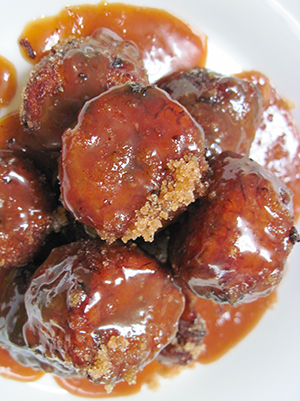
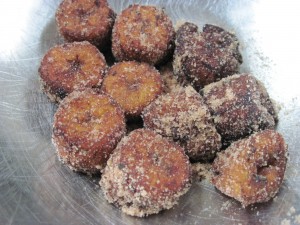
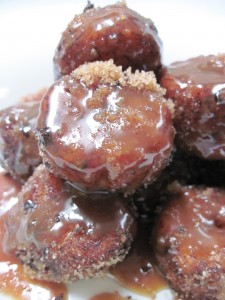
I like to toss mine with some coarse sea salt as they come out of the fryer and then right into a spicy cinnamon mixture which elevates them to an extraordinary level. If you want to take them even further, turn them into platanos borrachos (drunken plantains) and toss them into some liquor laden caramel sauce that has been laced with a good bourbon, whiskey or rum.
This time, I couldn’t help myself…I did both. The only thing that was missing was some ice cream which would have really put them over the top.
Regardless of how you serve them, they will disappear quickly. Eating platanos maduros any old way always takes me back to great times with great friends…
Platanos Maduros
Very ripe plantains
Vegetable oil for frying
Coarse salt
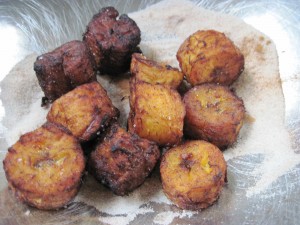
Preheat your oil to about 350°F or about the same temperature you would use to cook French fries. As the oil is heating, slice open the skin and cut the plantain into strips or little chunks. Once the oil is heated, gently drop them into the hot oil and fry until golden brown with a slight char. Remove them from the oil and place them onto a paper lined plate to drain the oil, and then add the salt. Next, immediately toss them into the bowl with the spicy sugar mixture. You can enjoy them just like this, but if you have decided to make the caramel instead, just plate them up by themselves or add them to some ice cream with a few tablespoonfuls of caramel.
Sugar mixture
1 cup granulated sugar
5 teaspoons ground cinnamon
¼ teaspoon cloves
¼ teaspoon nutmeg
¼ teaspoon allspice
¼ to ½ teaspoon ancho chile powder **to your taste
NOTE: Sugar mixture is enough for 10 large plantains
Mix everything together and set aside
Drunken Caramel Sauce
½ cup granulated sugar
¼ cup water
2 teaspoons corn syrup (prevents crystallization)
¼ – ½ cup heavy cream
¼ cup liquor of your choice
Add the sugar, water and corn syrup to a small pot and cook this together over moderate heat until the sugar turns an amber color. Once you have reached this point, add a little of the cream at a time and stir it in with a wooden spoon. The more cream you add, the thinner and the lighter the caramel sauce will be, so you can gauge the consistency and the color of the caramel this way. Be careful when adding the cream because it will boil up slightly. Once you have added the amount of cream that you like, add in the liquor and continue to stir until it has incorporated well with the rest of the caramel. Continue to cook the mixture a little more until it starts to slightly thicken again, then remove from the heat and set aside.
Leave a Reply