
When it comes to tradition, the Jewish religion beautifully weaves food (or the lack of it) into meaningful ceremonies that were created to regenerate and realign the mind, body and spirit with spiritual teachings. There are so many meanings invested in traditional Jewish foods that it seems like every act of eating is an expression of the culture, religion and history. As a result, many traditional foods are kept on the menu out of respect for this tradition and not necessarily because they taste good. One such item is the Jewish honey cake, which is not so much loved as it is revered…
Jewish honey cake otherwise known as lekach is one of the symbolically significant foods traditionally eaten by Ashkenazi Jews during Rosh Hashanah in hopes of ensuring a sweet New Year. I hate to say it, but the honey cake is more of a symbolic food similar to the beloved fruitcake that is always served at many Christian festivities, but never actually eaten. In most Jewish families, there is a honey cake recipe that has been passed down through the generations and still recreated for each celebration.
Interestingly, biblical Israel was known as the land of milk and honey, and recent archaeological discoveries of beehives in some of the regions shows just how important honey was to the Jewish culture and really confirms the truth behind that phrase…
Individual recipes vary widely and when I began doing research several months ago, I came across thousands of recipes. Some were made with butter and others with oil. Some included the addition of coffee or tea for a deeper color and others include orange juice and/or orange zest and in some recipes I even found orange marmalade for the batter. The addition of a variety of different spices like cinnamon, cloves, allspice, ginger and nutmeg is very reminiscent of a gingerbread cake or another popular item in Germany called lebkuchen. German-Christian pilgrims developed a taste for honey cake on their trips to the Holy Land during the Middle Ages. The overall use of honey as an ingredient declined in Eastern European cooking during the 17th century but remained popular in Jewish cuisine.
Desserts made with honey keep especially well and taste better as they age because of honey’s hygroscopic properties…which means that it attracts and holds onto moisture as it ages, instead of drying out like other cakes. Some even specify that the cake should be made several days to a week in advance of serving to allow the flavors to develop. Honey is also a naturally antibacterial agent that serves as a powerful natural preservative.
Honey’s natural ability to keep a cake fresh would have made it particularly valuable in the days before refrigeration…but even today, being able to make desserts ahead of time for Holidays means there is one less thing to worry about when the guests arrive.
Most honey cake connoisseurs would agree that the perfect honey cake is moist and springy, with a gooey crumb and a gentle hint of spice to round out the honey’s sweetness, but unfortunately, the majority of recipes deliver a much drier and flavorless product. As a result, with all of its storied legacy and symbolic power, the honey cake still gets pushed aside at the Holiday table because a good honey cake is very hard to find…
I took this on as a challenge and created something truly delicious. A few unique ideas from here and there and several trial runs on developing the ingredient quantities and we have a truly delicious product.
So, regardless of whether you are Jewish or Christian, don’t wait another minute to try this cake. Dress it up for a more elegant presentation with some crème anglais sauce or serve it as is for a delicious snack cake alternative at home…either way, you just won’t go wrong.
Jewish Honey Cake
3 eggs
1 cup sugar
1 cup honey
¾ cup vegetable oil (can use up to 1 cup)
2 teaspoons orange zest
¼ cup orange juice
¼ cup of whiskey (or very strong tea)
2 teaspoons vanilla
2 ½ cups unbleached flour
3 teaspoons cinnamon
¼ teaspoon nutmeg
¼ teaspoon allspice
½ teaspoon cloves
½ teaspoon ginger
½ -1 teaspoon ground black pepper *optional but adds a lovely spicy note
½ teaspoon salt
1 ½ teaspoons baking soda
1 ½ teaspoons baking powder
¼ cup strained orange marmalade plus 2 teaspoons strong tea* optional glaze
If you are going to use the marmalade glaze, then strain the marmalade thru a sieve and stir in the tea. Set this aside until later when you will warm it up in the microwave and brush all over the cake. If you choose to do this, don’t throw away the orange pieces from the marmalade simply add it to your cake batter…I hate to waste things…if you choose not to use the marmalade glaze, that’s OK too…
Add the sugar, honey and oil plus all of the other wet ingredients together in a small bowl and whisk everything together. If you are using the marmalade and have some orange pieces that have been strained out of the jam, then add them to this. If the pieces are really big, make sure to cut them into smaller pieces.
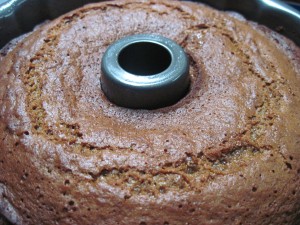
Next sift together all of the dry ingredients into another medium sized bowl. Add all of the mixed wet ingredients to the dry and combine them all well together. Pour this batter into a sprayed bundt pan and make this on a relatively low temperature. I can adjust my temp digitally on my oven, so I baked this at 335°F for about 45 minutes. I ended up cracking the door open for the last 10-15 minutes with an oven mitt to prevent the cake from getting too dark on the outside. To prevent this, you may want to lightly cover the cake with some foil that has been sprayed a little to prevent the cake from sticking to it as it bakes and rises. I didn’t do this but it is an option. Once baked, remove the cake from the oven and allow it to cool for about 15 minutes, then invert onto a cake plate. Warm the tea and marmalade mixture in the microwave for about 1 minute until it liquefies, and then brush this all over the entire cake. Serve warm or at room temperature.
Leave a Reply