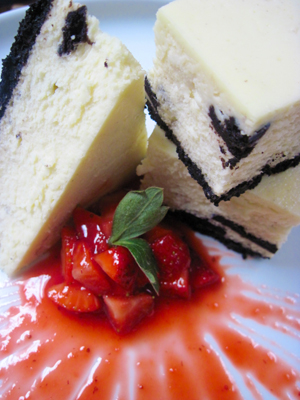
The one dessert that seems to scare people the most is cheesecake. I am asked most often about the secret to making the perfect cheesecake which ideally should be light, creamy, and not overly dense. Like anything else, making a cheesecake has a few hard and fast rules that you need to stick to in order to get a great result.
This is my personal recipe that I have used for years, and it bakes beautifully whether you make it in a round pan for an individual serving, or if you bake it in a sheet pan to cut into mini pieces that would be perfect for any event.
The few things to remember about making a great cheesecake are:
- You don’t need a springform pan, a regular round cake pan is perfect to bake the cheesecake in. After it has cooled and has been chilled, simply heat the bottom of the pan slightly and pop it out.
- Always use parchment rounds in the bottom of the pan
- Gently bake the pressed crust for about 10 minutes at 350°F and let it cool before pouring in the batter
- Cream cheese should be allowed to soften at room temperature for about one hour before making the batter to prevent any lumps
- Do not over mix the batter, just make sure everything is well incorporated
- Bake low and slow, no messy water bath is required but If it makes you feel better you can use a water bath
- Cheesecake should not take on any color, if it has, it has been over baked
- Do not open the oven doors while baking or cracks will appear
- After the baking time is complete, allow cheesecakes to cool in the oven which has been turned off
- Once completely cool, cover and refrigerate or freeze for at least 2 hours
- When ready to remove from the cake pan, run a small knife around the entire inside edge of the pan to loosen the cheesecake from any parts that may still be attached to the pan. Cover the top with a piece of plastic wrap and heat the bottom gently over very low heat, making sure to rotate the pan so that it heats evenly all the way around. If the cheesecake has been refrigerated, it will not require that much heating, but if it has been frozen, it will require a little more. Put a large plate over the top of the cheesecake that is still covered with plastic, and pop it out gently from the pan, using small, gentle taps. Peel off the paper and either put the serving plate or a cake circle on the bottom, turn upright and then remove the plastic wrap.
Cookies & Cream Cheesecake (makes 1-9” cheesecake)
24 oz cream cheese, softened at room temp
1 cup granulated sugar
2 Tablespoons vanilla
1 cup sour cream
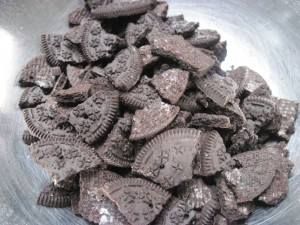
20 crushed wafers, cream removed
4 eggs
16 sandwich cookies or 32 chocolate wafers for cookie base(Oreo or Hydrox, cream removed)
3-4 Tablespoon melted butter for cookie base
Preheat your oven to 250°F. First cut out a round piece of parchment to fit the bottom of your pan.
Remove the cream from the inside of 16 sandwich cookies, pulse in a food processor until completely smooth then stir in the melted butter. If it needs a little more, then add a little more butter. You know that you have enough butter when you squeeze it together and the cookie base sticks together like this.
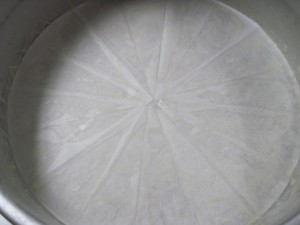
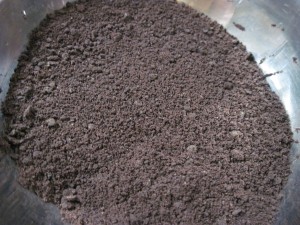

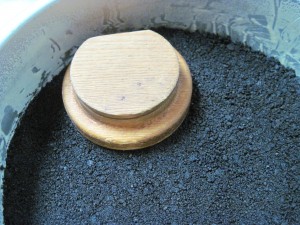
Pour the cookie mix into your lined cake pan, and you can use the lid of a jar or the base of a cup/jar to press the crust together before baking. Once it has all been pressed together, bake for about 10 minutes at 350°F. Set aside to cool and begin making your batter.
Add the softened cream cheese to the bowl of your stand mixer and cream for about 5 minutes. Scrape down the sides/bottom then slowly add the granulated sugar. Scrape down the sides/bottom again then add the sour cream and vanilla. Scrape down the sides/bottom again and lastly add the eggs until just combined. Your batter should be smooth. Add in the crushed wafers and stir until just combined into batter.
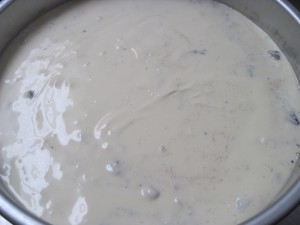
Pour the batter into your prepared cake pan and tap gently on your counter to remove any air bubbles that may be trapped in the batter.
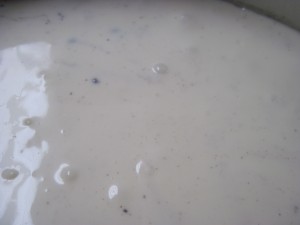
Place the cheesecake into your preheated oven and bake for 1 ½ hours. DO NOT open the door during the cooking time or you will have cracks. Once the cooking time is completed, turn the oven off and allow the cheesecake to cool completely in the oven for another 2 hours. Once cool, cover with plastic and either freeze or refrigerate for at least 2 hours.
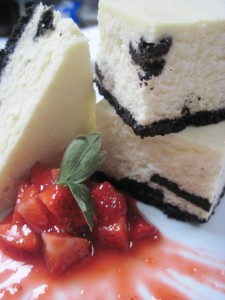
When ready to remove from the cake pan, run a small knife around the entire inside edge of the pan to loosen the cheesecake from any parts that may still be attached to the pan. Cover the top with a piece of plastic wrap and heat the bottom gently over very low heat, making sure to rotate the pan so that it heats evenly all the way around. If the cheesecake has been refrigerated, it will not require that much heating, but if it has been frozen, it will require a little more. Put a large plate over the top of the cheesecake that is still covered with plastic, and pop it out gently from the pan, using small, gentle taps. Peel off the paper and either put the serving plate or a cake circle on the part with the crust, turn upright and then remove the plastic wrap. Use a knife that has been dipped in hot water (then wiped clean with a paper towel), to slice perfect pieces of cheesecake.


Leave a Reply