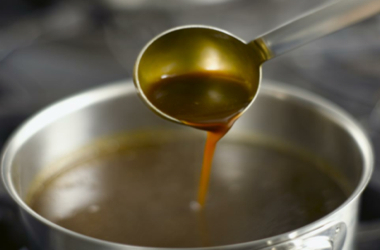
I think that the basics of good cooking does not only involve the preparation of a good meal, but many times involves the preparation of a flavorful sauce that compliments but does not over power a dish.
A mother sauce is a base sauce that is used in making different variations of the original sauce. These resulting sauces are called small sauces or secondary sauces. The four basic categories of sauces were set forth by Antonin Careme, in the 19th century and they included the Brown Sauce (sauce espagnole), the Veloute Sauce, the Bechamel Sauce and the Tomato Sauce. Then in the 20th century, Auguste Escoffier added a fifth category called Hollandaise, which includes all of the sauces that are created through an emulsion process, like mayonnaise.
Brown Sauce or Sauce Espagnole is a brown stock based sauce that is used for hearty meals. The key to mastering this sauce is learning how to develop a dark brown roux, by browning flour and clarified butter. Using clarified butter will help in preventing the bitterness that develops when the solids in the butter that are not removed. This will occur when the solids begin to burn before the flour has fully developed its color. Some of the sauces that use this as a mother sauce are the classic Demi Glace sauce, bordelaise sauce, Madeira Sauce and Lyonnaise sauce. Traditionally, demi glace sauce was made with veal stock, but it is not unheard of to use either chicken or beef stock in modern kitchens today. Generally, a ratio of 1:1 (stock to espagnole sauce) is combined and then reduced by half. This is a very time consuming sauce to make, and most modern kitchens create a simulated version called jus lie (thickened meat juice), which Julia Child called a semi demi-glace sauce.
Veloute Sauce is a thin, white sauce that is made by combining a white roux with chicken or fish stock. It is often called a blonde sauce and usually served with chicken, fish, steamed vegetables, pastas, rice and sometime veal. The ideal consistency should be thin enough to pour, but it should coat the back of a spoon. Common sauces made from this are white wine sauce, sauce supreme, sauce allemande, sauce poulette, sauce bercy or sauce Normandy.
Bechamel Sauce is also a white sauce that is made with a white roux, but uses milk or cream instead of stock. The roux is cooked quickly for a few minutes (only to remove the starchy taste from the flour), and the warm milk is poured in then whisked until the béchamel thickens. This is a very versatile sauce that is used in many cultures. With this you can make a cream sauce, mornay sauce, cheddar cheese sauce, or nantua (crayfish sauce).
Tomato Sauce can be made from raw tomatoes, tomato paste, tomato puree or stewed tomatoes. Some people add sugar to their tomato sauce to offset the acidity, but not enough to make the sweetness perceptible. Tomato sauces are used a great deal in Creole cooking, but are also very popular in many other cultures, because it goes well with so many things.
Hollandaise (Emulsions) uses egg yolks and clarified butter (or oil) as a base, and are generally flavored with white wine vinegar, lemon juice, salt, white pepper and sometimes mustard. They are generally served with eggs, vegetables (especially asparagus), poultry and fish. Some of the secondary sauces created from Hollandaise sauce is béarnaise sauce (for beef), mayonnaise and mustard sauce.
www.goodfoodgourmet.com
Leave a Reply