 From time to time, I would catch an article in our local paper about a new winery opening up in the Maryland area. I never really thought much about it, but filed it away in my mind as an interesting story to write about in the future.
In April of this year, I had the great opportunity to travel throughout France on a business trip, where I logged in over 3,000 km (1864 miles) in a 2 week period, criss-crossing the country and touching upon the many different wine regions that included Languedoc-Rousillon in the south, and the Loire Valley, Burgundy and Chablis in the mid and northeast regions of the country.
The experience was one that I shall not soon forget. It included a gastronomic tour of local and regional specialties that offered seafood specialties in the southern coastal town of Sete, some delicious new experiences with un-pasteurized cheeses that are not permitted in the USA, my first tasting of the famous charolais beef, enjoying the regional Burgundian specialty called cassoulet while actually in Burgundy, indulging in France’s famously plump escargot and washing it all down with lots of wine — oh, the wine — there was so much to choose from that included the sparkling wines that France is so well known for, in addition to the reds, whites, and the ever popular rosé. In the 6 months leading up to my trip, I studied everything I could get my hands on about the country and the different regions and learned so much about the country’s history, especially the history surrounding the wine industry.
While I was there, my mind wandered back to the articles I had read about Maryland wineries. The regulations for much of the wine growing regions in France are quite strict for the higher end wines. The French believe a great deal in the concept of terroir. This principle is based on the proven knowledge that soil properties, amount of rain, sun and even the existence of micro climates in the valleys and mountainous regions create weather variations that influence the flavor of the grapes, and ultimately the final product.
Did Maryland have enough diversity in its terroir to produce a good or even great product? Did the area have consistent success growing certain grapes or was it still in the discovery phase of what works and what doesn’t? Maryland is not known for its temperate climate, so what kind of grapes grow well in these parts and are they quality grapes that produce great results? Does the industry have any momentum and if the wines are good, then why aren’t they more readily available?
All of these questions filled my mind and my excitement grew as I wanted to dive into this growing industry that just so happened to be in my backyard.
Having spent most of my adult life in Maryland, I can’t say that the area was ever really known for wine. I’ve known some people here who have made their own table wine, but it wasn’t an industry that was glaringly obvious as it would be if I grew up in the Napa Valley.
To get some of my questions answered, the first place I reached out to was the Maryland Wine Association who were kind enough to invite me to some of their local events. Their thinking was that I should not only be reading and learning about the wines, but tasting them as well to be able to offer a more well rounded stamp of approval.
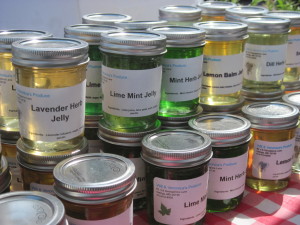
The first festival that I attended was the Eat-Drink-Go Local event that they sponsor annually in North Beach, Maryland. This was one of those festivals that was part farmer’s market, and part festival. You were able to enjoy some prepared food from on-site vendors, pick up some local fruits, vegetables or unique jams from local farmers like Will & Veronica’s produce stand, treat yourself to a sack of the always popular, knuckle sized popped kettle corn from Calvert Kettle Corn and of course, the reason why we all made the trek to North Beach — to fill our token glasses with samples of delicious wines from today’s lineup of wineries.


Here I could see the wineries in action, taste a sampling of their products, talk to the vintners themselves and more importantly, eavesdrop on the comments of the public at large. Surprisingly enough, the comments were glowing and people could not get enough –as a matter of fact, many of the wineries had sold out of some of their wines before I even got there…
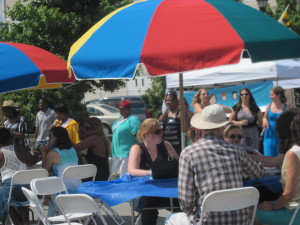
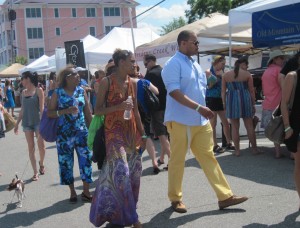
The wineries in attendance for the event were:
Basignani Winery
Boordy Vineyards
Cove Point Winery
Cygnus Wine Cellars
Far Eastern Shore Winery
Fridays Creek Winery
Knob Hall Winery
Linganore Winecellars
Orchid Cellar
Perigeaux Vineyards & Winery
Port of Leonardtown
Romano Vineyard & Winery
Solomons Island Winery
Slack Wine
St Michaels Winery
Thanksgiving Farms
I did a little research before heading to the event so that I knew what to look for and what questions to ask.
I discovered that the first recorded winemaking entry in Maryland was documented back in the 17th century, and in 1662, Governor Calvert planted 200 acres of European grapes along the banks of the St Mary’s River. It was not until the 1930’s when Phillip Wagner published American Wines & How to Make Them and Grapes Into Wine, where he documented wine making guidelines and results of his experimentation with various wine making techniques that included the hybridization of grapes. He was also the founder of Boordy vineyards — Maryland’s oldest winery that started up in 1945, and currently has 40 acres of vineyards with two unique micro climates.
 Boordy Vinyards, image courtesy of the Washington Post
Over the years, there were a lot of hit and miss efforts that resulted in wines that weren’t very good, but the 1980’s were a defining decade for the wine industry both legally and organizationally. The creation of both the Maryland Grape Growers Association and the Maryland Wineries Association helped new and existing wineries with much needed information, resources and promotion. It actually turns out that with its wide array of climates, Maryland has four distinct growing regions that allows for different grape varieties to grow and thrive throughout the state.
A majority of the state’s vineyards are planted in Central Maryland, and some of the state’s oldest wineries are located in this area known as the Piedmont Plateau. Because there are so many wineries in this area, guided or self guided wine trails are available from one winery to another where you can sample wines and learn more about the area.
The types of grapes grown in these parts include Cabernet Sauvignon, Merlot, Cabernet Franc, Chardonnay and Pinot Gris.
The soil of the Eastern regions and the Southern Plain offer a great growing area for many of the Mediterranean varieties such as Barbera, Sangiovese, Montepulciano and Vidal, in addition to Chardonnay, Blaufrankisch, and the hybrid Catawba, and Symphony grapes.
The western Maryland region requires grapes that are a little hardier because of the long winters and short growing season, so you will generally find wines from Cabernet Sauvignon, Cabernet Franc, Petit Verdot, Chardonnay, Chambourcin (also growing on the Eastern coast), and the hybrid Norton/Cynthiana, Seyval and Vidal grapes that are often used in ice wines.
With all of this, Maryland’s wine industry is still a work in progress, but the introduction of skilled winemakers and viticulturists has significantly improved the offerings in the last 10 years — but especially in the last 5 years. Some wineries are still experimenting with grapes varieties from other countries as they work in challenging growing conditions. The best grape growing regions have been found at the higher elevations, with rocky and less fertile soil. Areas with warm days and cool nights offer the best growing season, and the best grapes for the state seem to be Cabernet Franc, Chambourcin, Petit Verdot, Sauvignon Blanc, Albariño and Chardonnay.
Unlike the AOC wines of France that are much more regulated, the wines of Maryland (especially reds) benefit from blending different grapes rather than bottling individual varietals. Higher end wines in other countries that are designated as Premier Cru and Grand Cru are not blended, but offer single grape wines whose characteristics are influenced by their longer growing periods and environments. Many people believe that this approach is part of the problem and one of the main reasons why Maryland wines are not taken seriously.
But, don’t think for a minute that this approach results in inferior wines…
In fact many of the most popular wines in Europe and especially in France fall into the vin de pay (country wines) or vin de table (table wines) categories and are all blended wines. Some of the best characteristics and complexities are taken from many different grapes, even some from Premier Cru and Grand Cru vineyards that may have exceeded required growing yields for a particular year.
The moral of the story here is that you should never let a blended wine color your definition of what a good wine should be.
The other more significant issue is that Maryland wines come at a higher cost and makes them more difficult to sell in restaurants and liquor stores than imported ones. This influential detail is the reason why most wineries choose to sell their own wines through private tastings and events they host or participate in.
Most recently, local politics played a significant role in changing the way Maryland wines will now be available to the public, because they’ve realized the economic significance of this agricultural product. Now wine producers are blessed with tax credits and permission to ship their wines out of state. A new offsite permit removes previous restrictions and limits on wineries participating in farmer’s markets across the state. Now you can walk thru a farmers market and find unique Maryland wines amongst the more traditional offerings of baked goods and produce. Maryland has now joined the 12 other states that have access to delivery through Amazon Wine — a service that will soon be available online where you will be able to shop for over 200 great wines at modest price points without an expensive middle man.
As it stands, there are 51 operating vineyards in the state, and that statistic alone should make Maryland known for more than its crab cakes.
I was not able to try all of the wines at the event because many were sold out – but of the reds, whites, rosés, fruit and sparkling wines that I was able to try, there were a few that really stood out.
I’m no wine expert, but like most people who drink wine, I know what I like. I tend to stick to a smoother, demi sec fruitier wine. Most people prefer drier wines, and if you belong to this group then you will be happy with a good number of the more traditional red and whites from some of the larger wineries like Basignani Wineries, Boordy Vineyards, Cygnus Wine Cellars, Linganore Winecellars and Friday’s Creek Winery.
Linganore also offers a selection of fruit wines that include their Medieval mead served at the Maryland Renaissance Festival, dandelion wine and something called Tej, which is an Ethiopian honey wine. Another unique winery is Orchid Cellar whose unique fruit wines and very spicy Hunter wine made with hot chili peppers is very different from the norm. An honorable mention should go to a small winery called Thanksgiving Farms who grow and produce their own wines. Their product is very reminiscent of a good quality Bordeaux – in fact their grapes are the same ones (Cabernet Franc) used to produce wines from that region. The red wines I tasted were so smooth and delicious, that I commended them both on their blending efforts.
If you like your wines on the sweeter side, all of the wineries offered at least one choice of sweeter wines or dessert wines, but in this category, my hat goes off to St Michael’s Winery whose broader selection, especially their gollywobbler reds and whites, will keep you not only happy but also giggly at the mere mention of the name.
The next event I will be attending will be the Maryland Wine Festival (Sept 21-22, 2013) in Carroll County, showcasing over 30 wineries featuring over 200 wines from around the state. This is one of the oldest and largest wine festivals on the east coast and attracts over 25,000 people.
For more information about local wine events happening throughout the year, make sure to check out the link on the Maryland Wine events/festivals page. It’s always a great deal to buy tickets ahead of time, but if you choose to buy them at the door you can do that too at a slightly higher cost. For your ticket purchase, small tasting ‘shots’ of wine samples are given, and the vineyards were generous with additional samples if you wanted to try a little more. While you’re at it, make sure to check out the Maryland Wine Passport Program that offers wine lovers a few extra benefits.
Leave a Reply